The Problem
When I joined Saleor, there was no shared request collection. Everyone used their own tool — Postman, Insomnia, GraphQL Playground — and none of them had a shared, versioned collection. Every developer and QA was building requests from scratch, duplicating effort, and there was no single source of truth for how to call the API correctly.
How It Started
From Repetitive Requests to Organized Flows
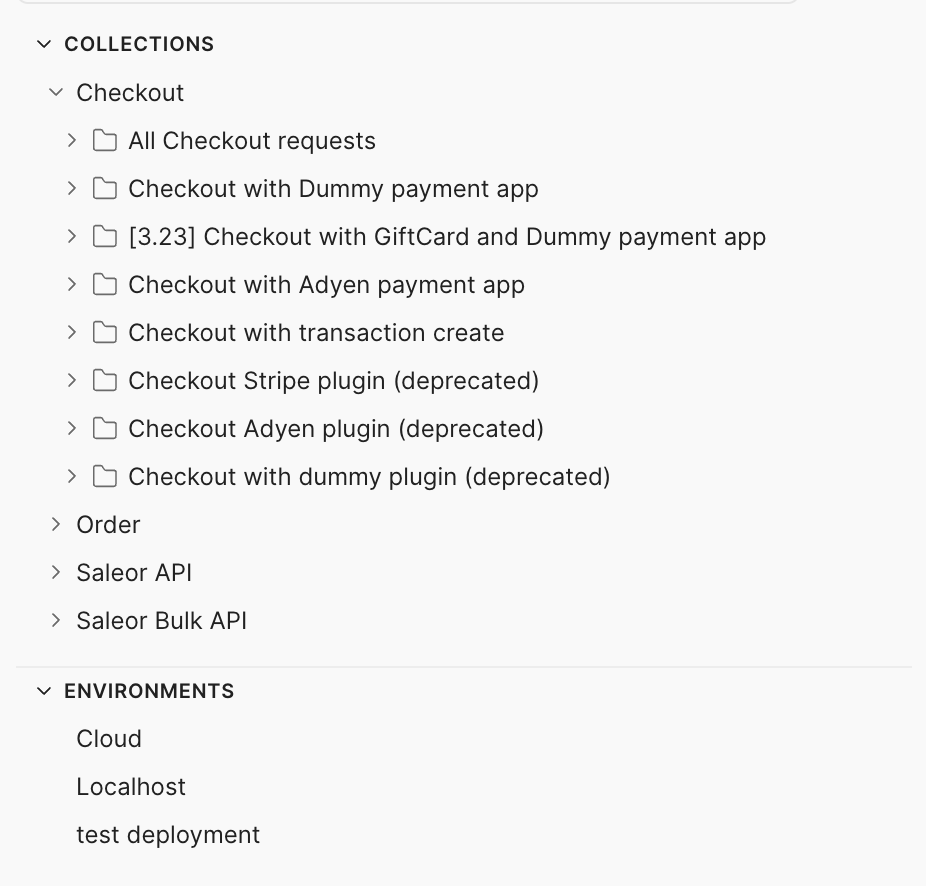
While learning the API — new mutations, new queries — I kept sending the same requests over and over. So I started organizing them: putting related requests in sequence inside folders, each one representing a complete checkout flow.
Pretty quickly I had folders for different scenarios: a common checkout, checkout with a voucher, for digital products, with different payment methods, with different shipping addresses. I could use the Postman Collection Runner to execute an entire folder at once, multiple times, and instantly have orders to work with.
Scripts & Environments
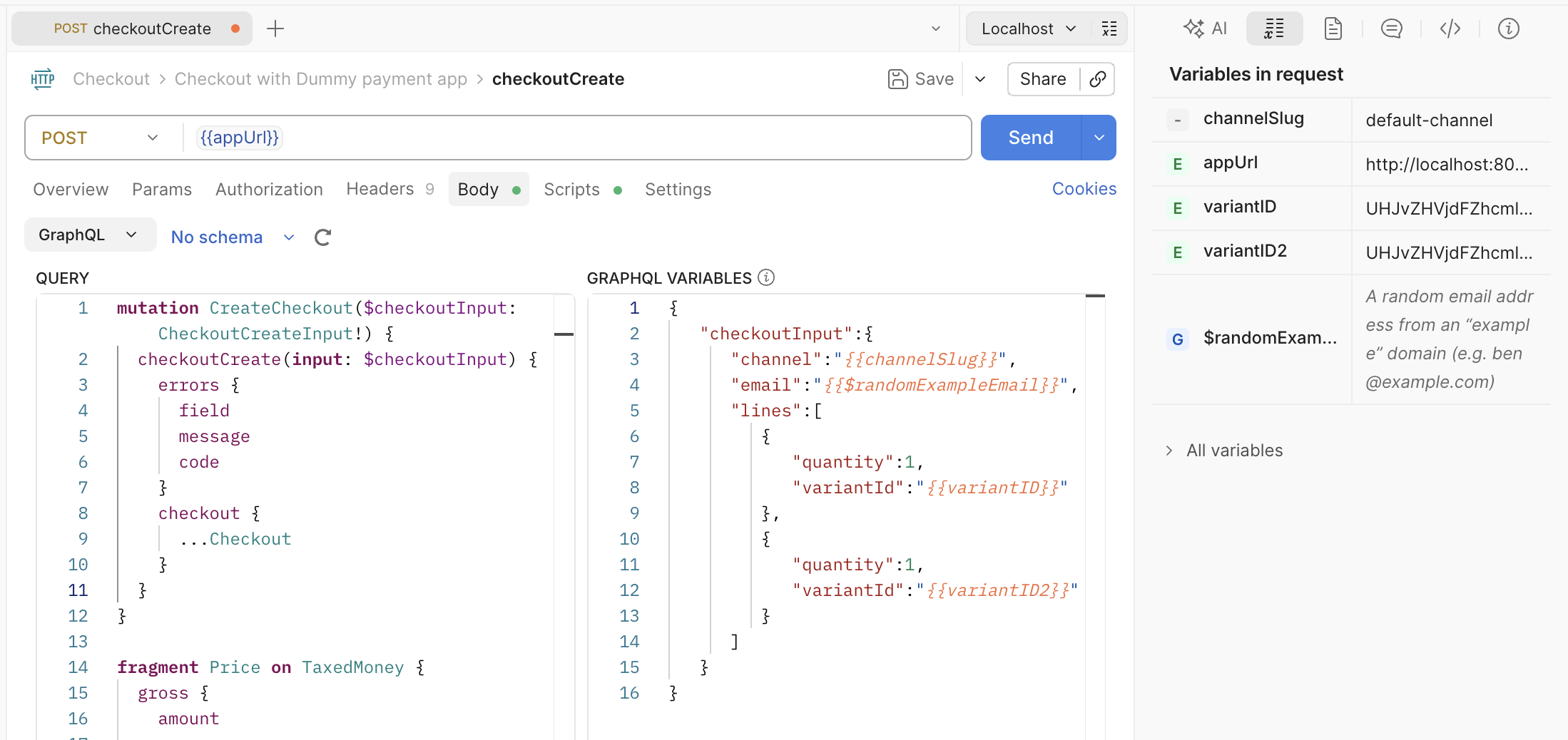
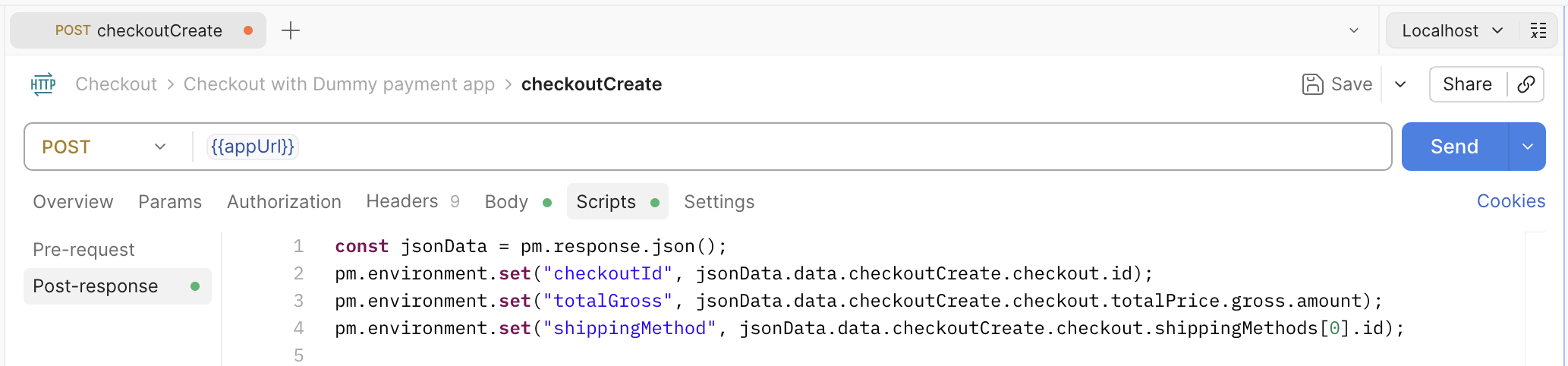
All requests were configured with pre-request and post-request scripts — extracting IDs, chaining tokens between steps, using dynamic variables for email addresses. I created multiple environments so I could effectively switch between staging, production, and local instances with one click.
Flows
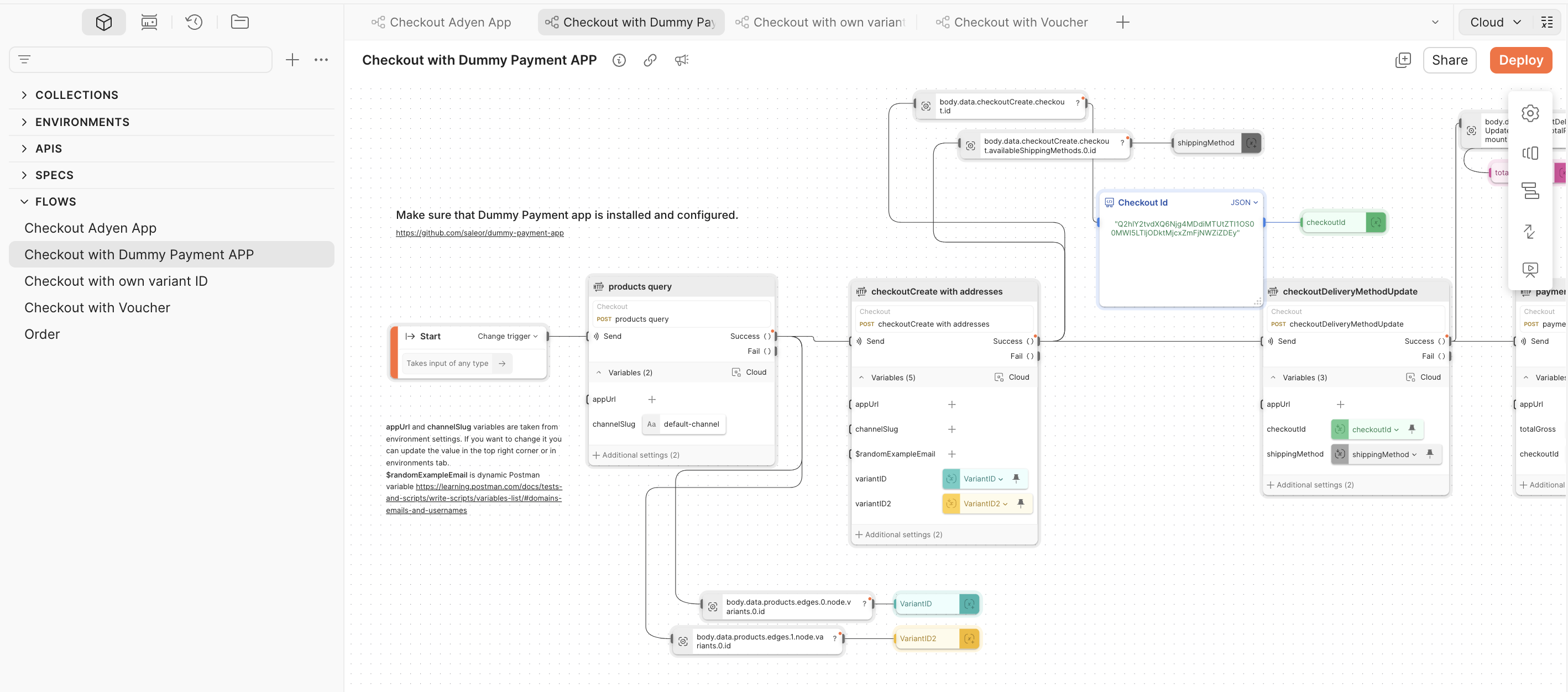
Next I discovered Postman Flows and created several. It was easier to manipulate and change variables in a single visual view, and run entire sequences with one click.
Internal Adoption
At this point I showed the collection in a company demo and a few developers started using it right away.
I also created a smoke test suite during functional testing of new mutations. We ran it before releases to make sure all critical paths worked as expected.
Going Public
Then a colleague shared an idea: Postman has a public directory of API collections where developers can discover ready-to-use examples. Why not publish ours there?
The Pitch
- Low-hanging fruit — the collection already existed
- Developers and agencies could find Saleor ready-to-use examples, complementing docs and playgrounds
- Increased Saleor visibility in the Postman ecosystem
- Built-in support for scripts and tests — a DX improvement out of the box
After a cleanup pass and a security review to make sure no passwords or secrets leaked through environment variables, we published it as the official Saleor collection.
Demo
Impact
Key Results
- Listed on Postman's Public API Network — discoverable by anyone
- Adopted by external developers and integration partners worldwide
- Reduced time-to-first-API-call for new Saleor users
- Confirmed via Postman's 2025 Rewind that the collection has active, ongoing usage
The collection isn't something we actively update on a schedule — but it's alive. Sometimes I spot a comment on Discord that the collection is missing a particular mutation, and I add it. It's community-driven maintenance at a low but steady pace.